
Point-of-View Shot
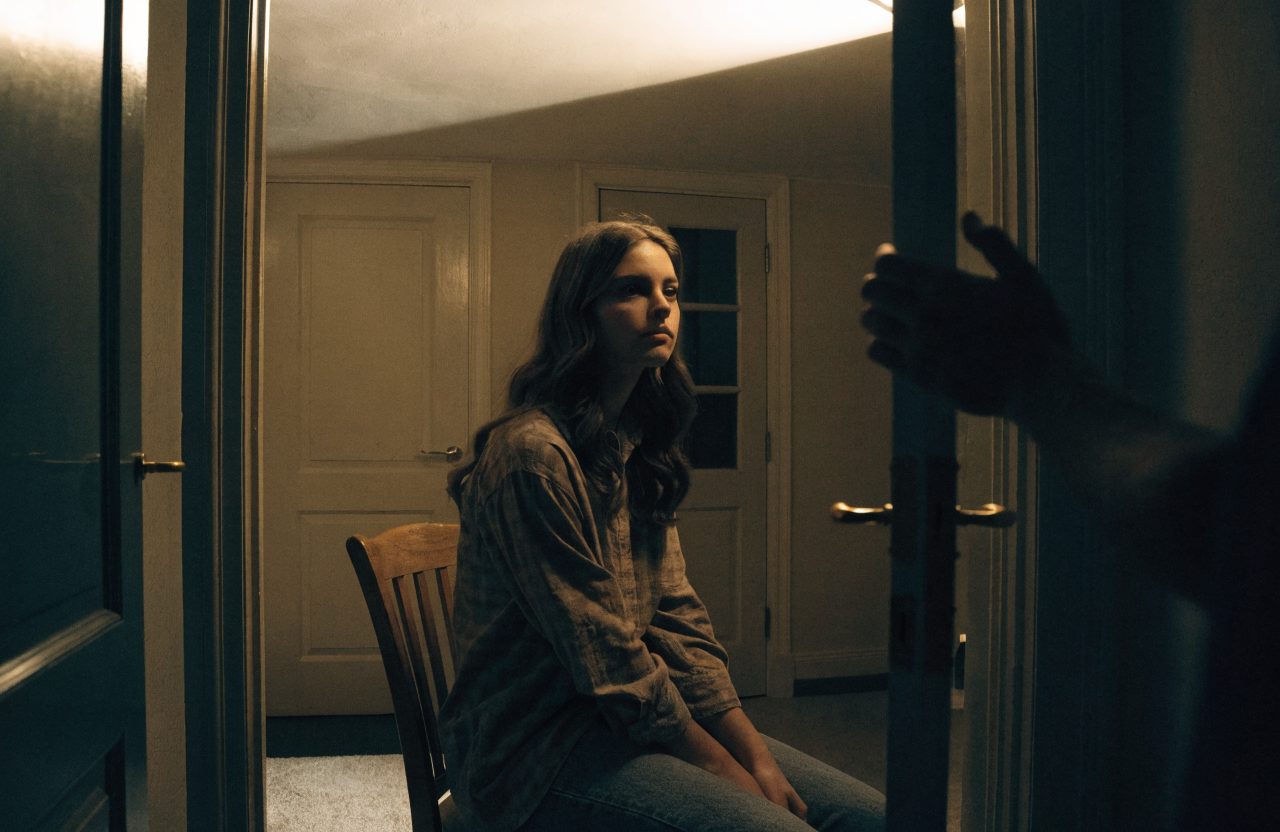
Place the camera where a character is looking to make the audience share their access, attention and uncertainty.
What it does
A point-of-view shot presents what a character sees from a position associated with their eyes. It usually gains clarity from an adjacent look or reaction, although sustained subjective sequences can establish the relationship through movement and bodily cues. Dean Cundey’s opening photography in Halloween uses a killer’s viewpoint to make the audience’s access deeply uncomfortable. Robert Burks’s work in Rear Window turns looking into the story’s central action, repeatedly linking observation, limited information and interpretation. A viewpoint is not automatically a wide lens or a perfectly literal simulation of human sight. Its purpose is to bind the viewer to a particular person’s knowledge. Avoid it when the sequence provides no clear owner for the look, or when decorative hands and exaggerated head movement distract from the information being perceived.
The prompt
Replace [Subject] with what you are shooting. Everything else is deliberate: the gear, stock and lighting are what push a generator towards this look.
Works well in
Runway, Kling
Pairs with
The Prompt Atlas
Every prompt here is a starting point. The Prompt Atlas is the full system: hundreds of production-ready prompts organised by outcome, with the reasoning behind each one so you can adapt rather than copy.