
Centred Axial Symmetry
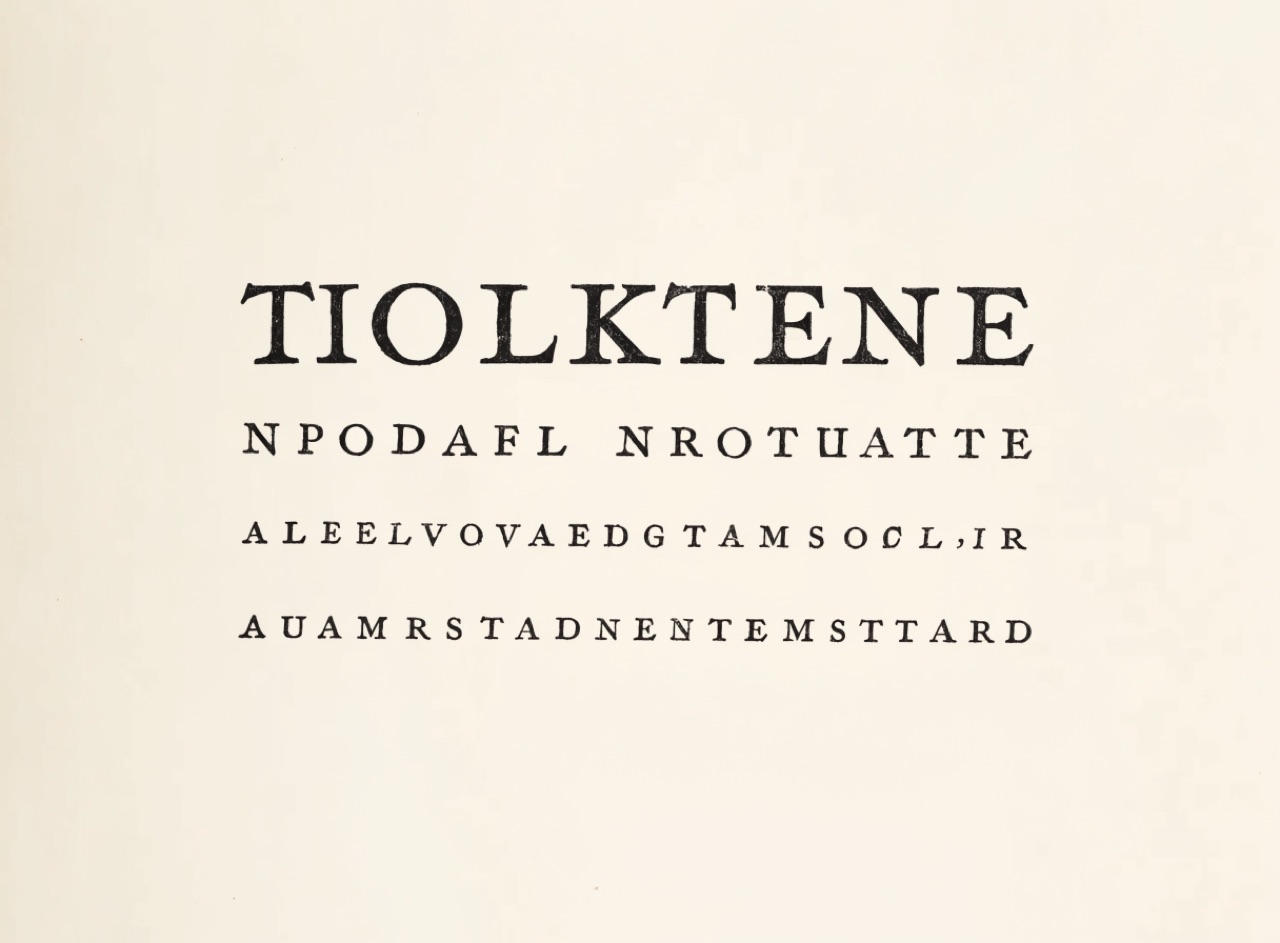
Everything centred on one vertical axis, which classical typography did for four centuries.
What it does
Before Tschichold argued for asymmetry in 1928, the title page was centred, and late in life he returned to it for Penguin. Centred setting demands that every line be measured: ragged centring reads as an accident, so line breaks are decided by sense and by length together. It suits ceremony, authority and the announcement. It is wrong for anything needing to feel current or informal, which is exactly why it now reads as distinctive against a feed of asymmetric AI layouts.
The prompt
Replace [Subject] with what you are shooting. Everything else is deliberate: the gear, stock and lighting are what push a generator towards this look.
Works well in
Midjourney, FLUX, Ideogram
Pairs with
Letterpress ImpressionModular Grid
The Prompt Atlas
Every prompt here is a starting point. The Prompt Atlas is the full system: hundreds of production-ready prompts organised by outcome, with the reasoning behind each one so you can adapt rather than copy.