
Three-Point Lighting
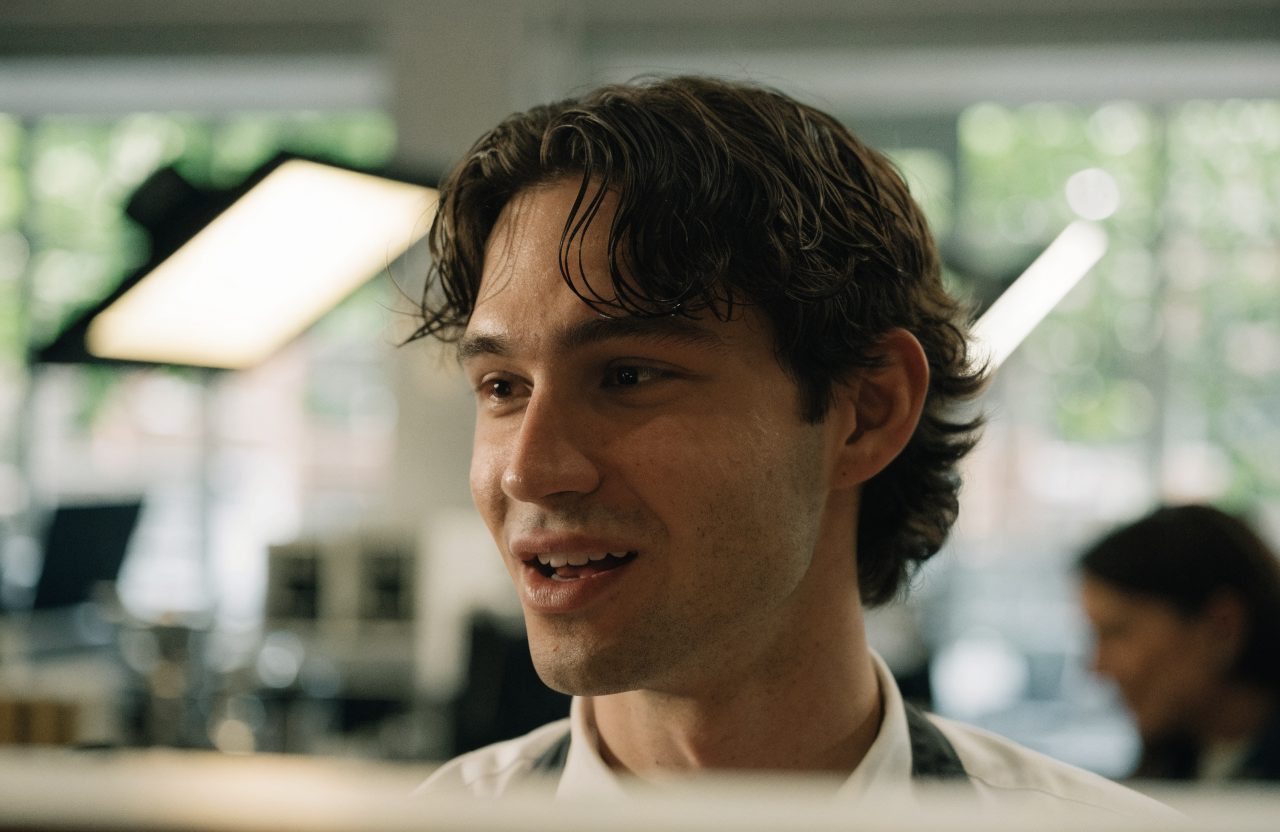
Classic key, fill and rim that models a face clearly so the audience can read expression without questioning the light.
What it does
Three-point lighting is the grammar of studio portraiture: a key that sets direction, a fill that decides how much of the shadow side remains readable, and a rim that lifts the subject off the background. Emotionally it offers clarity and competence. The audience feels looked after. Faces stay legible, continuity matches across coverage, and nothing in the light asks a question the scene has not earned. Gregg Toland pushed a more sculpted studio version in Citizen Kane, hanging units into the set so Welles could stage in depth without losing facial modelling. Arthur Edeson used a glossier three-point on Casablanca, where close-ups had to carry moral argument between Bogart and Bergman. Use it for interviews, dialogue coverage and any scene whose job is comprehension. Do not use it when the drama depends on withheld information, on a single motivated practical, or on the naturalistic underexposure associated with Bradford Young and Emmanuel Lubezki. The rim in particular will announce that a crew was present.
The prompt
Replace [Subject] with what you are shooting. Everything else is deliberate: the gear, stock and lighting are what push a generator towards this look.
Works well in
Midjourney, Flux, Stable Diffusion
Pairs with
Rembrandt LightingBounce Lighting
The Prompt Atlas
Every prompt here is a starting point. The Prompt Atlas is the full system: hundreds of production-ready prompts organised by outcome, with the reasoning behind each one so you can adapt rather than copy.