
Overhead Shot / Bird’s-Eye View
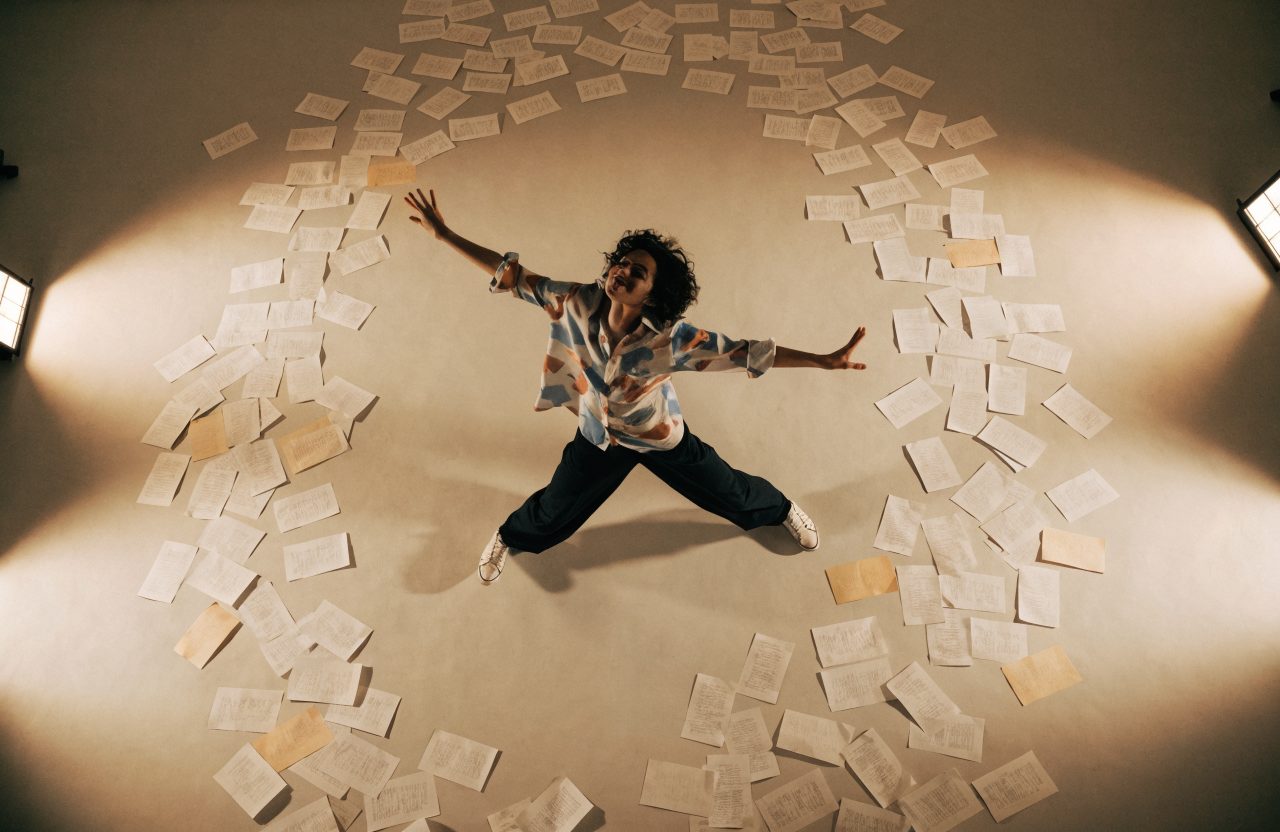
Point the camera straight down to turn bodies and spaces into a revealing plan, pattern or aftermath.
What it does
An overhead shot places the camera above the action with the lens directed vertically, or almost vertically, towards the ground. It suppresses the usual hierarchy of faces and horizons, allowing movement, arrangement and consequence to become legible as a pattern. Michael Chapman’s photography in Taxi Driver uses the overhead aftermath of violence to create a disturbing distance from the protagonist’s immediate experience. Janusz Kamiński’s work in Minority Report turns overhead views during the spider search into a map of domestic space and invasive surveillance. The effect can be analytical, fatalistic or unexpectedly playful, depending on what the pattern reveals. Design the floor, props and body positions carefully because they become the composition. Avoid it when facial interaction is indispensable, or when decorative symmetry makes a painful event feel unintentionally ornamental.
The prompt
Replace [Subject] with what you are shooting. Everything else is deliberate: the gear, stock and lighting are what push a generator towards this look.
Works well in
Midjourney, FLUX, Runway
Pairs with
The Prompt Atlas
Every prompt here is a starting point. The Prompt Atlas is the full system: hundreds of production-ready prompts organised by outcome, with the reasoning behind each one so you can adapt rather than copy.