
Full Shot
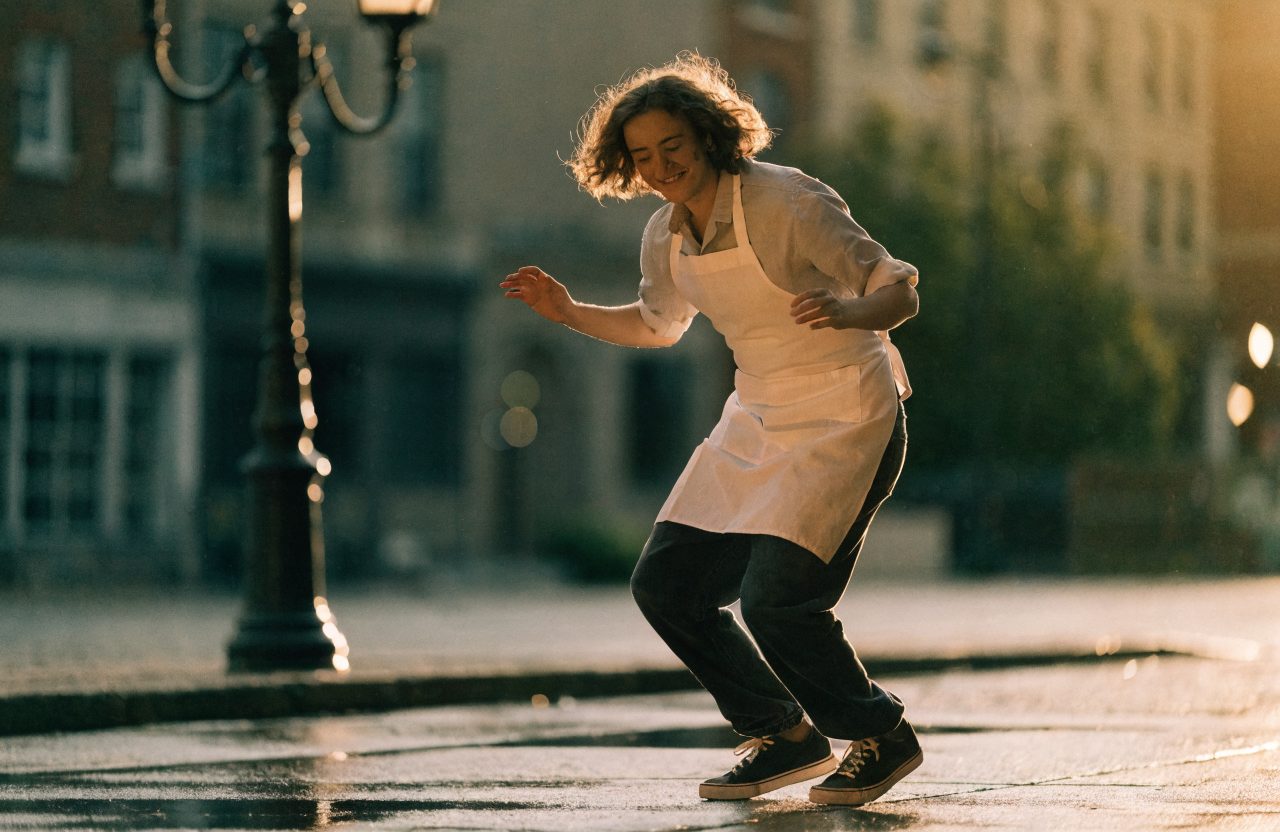
Frame the entire body so posture, costume and movement tell the story without cutting away.
What it does
A full shot contains the complete figure, including the feet, while giving the body more prominence than its surroundings. It is particularly useful when a performance depends on balance, hesitation, gesture or the relationship between a person and an object. Charlie Chaplin’s Modern Times makes physical predicament readable through complete bodily action, rather than fragmenting every movement into close-ups. In Singin’ in the Rain, Harold Rosson’s photography allows dance to unfold with the performer’s changing relationship to the pavement, umbrella and lamppost intact. This framing gives audiences the pleasure of witnessing an action rather than assembling it from edits. Leave practical room above the head and below the feet, especially during movement. Avoid it when a small facial change is the scene’s decisive event, or when incidental floor space weakens an otherwise concentrated composition.
The prompt
Replace [Subject] with what you are shooting. Everything else is deliberate: the gear, stock and lighting are what push a generator towards this look.
Works well in
Runway, Kling, Midjourney
Pairs with
Eye-Level ShotSpherical Lenses
The Prompt Atlas
Every prompt here is a starting point. The Prompt Atlas is the full system: hundreds of production-ready prompts organised by outcome, with the reasoning behind each one so you can adapt rather than copy.