
Low-Angle Shot
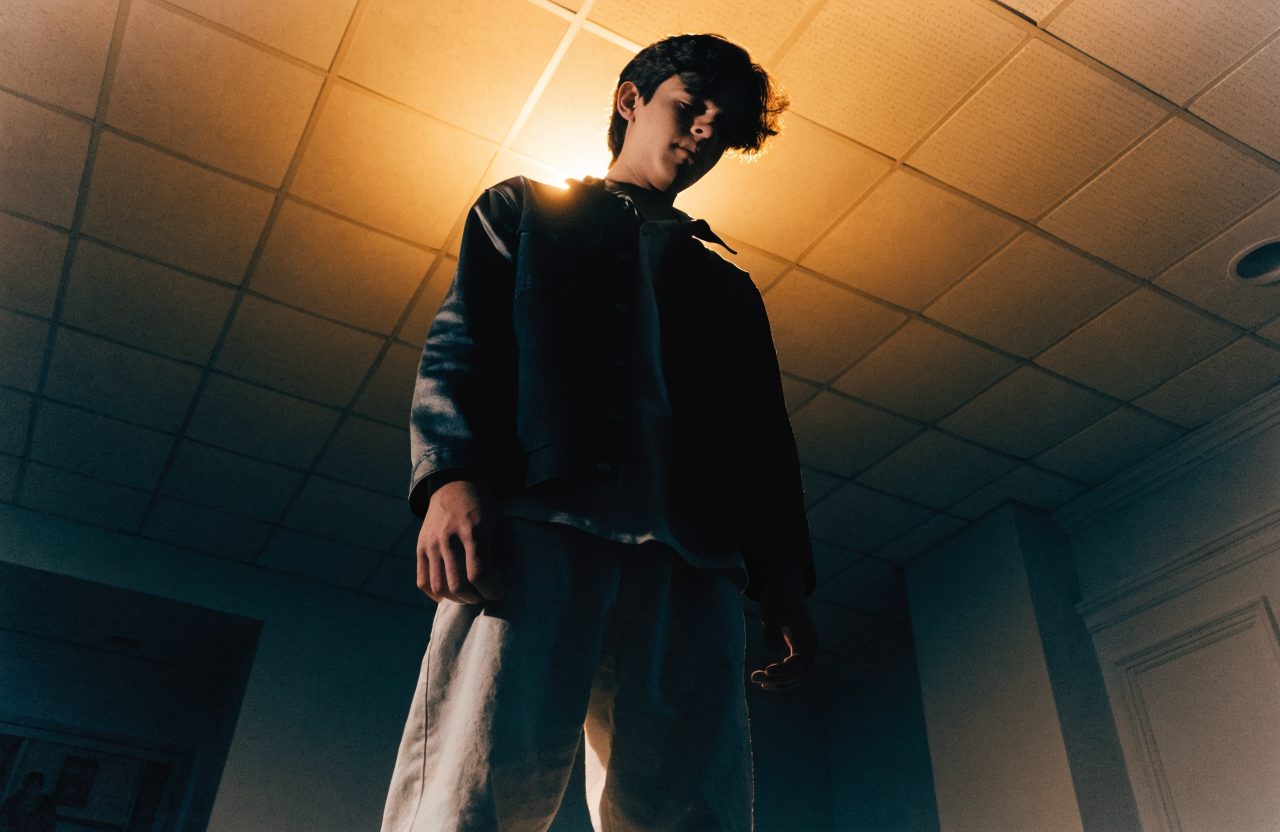
Look upwards towards the subject to amplify stature, expose overhead space or make proximity feel threatening.
What it does
A low-angle shot directs the lens upwards from below the subject’s eyeline. It can increase apparent stature, but power is only one possible result: a looming ceiling or an awkwardly exposed face can make someone seem trapped, grotesque or vulnerable. Gregg Toland’s low-angle compositions in Citizen Kane bring ceilings into view and give rooms a forceful relationship to the people occupying them. Russell Metty’s photography in Touch of Evil uses low viewpoints and assertive spatial relationships to intensify a corrupt, unstable world. Consider what rises behind the subject, because that background often determines the shot’s meaning. Keep close wide-angle facial distortion intentional. Avoid using the angle as a routine badge of importance, and avoid it when the nostrils, chin or converging architecture undermine the performance without adding a useful dramatic idea.
The prompt
Replace [Subject] with what you are shooting. Everything else is deliberate: the gear, stock and lighting are what push a generator towards this look.
Works well in
Midjourney, FLUX, Kling
Pairs with
Medium Long Shot / American ShotWide-Angle Lens
The Prompt Atlas
Every prompt here is a starting point. The Prompt Atlas is the full system: hundreds of production-ready prompts organised by outcome, with the reasoning behind each one so you can adapt rather than copy.