
High-Angle Shot
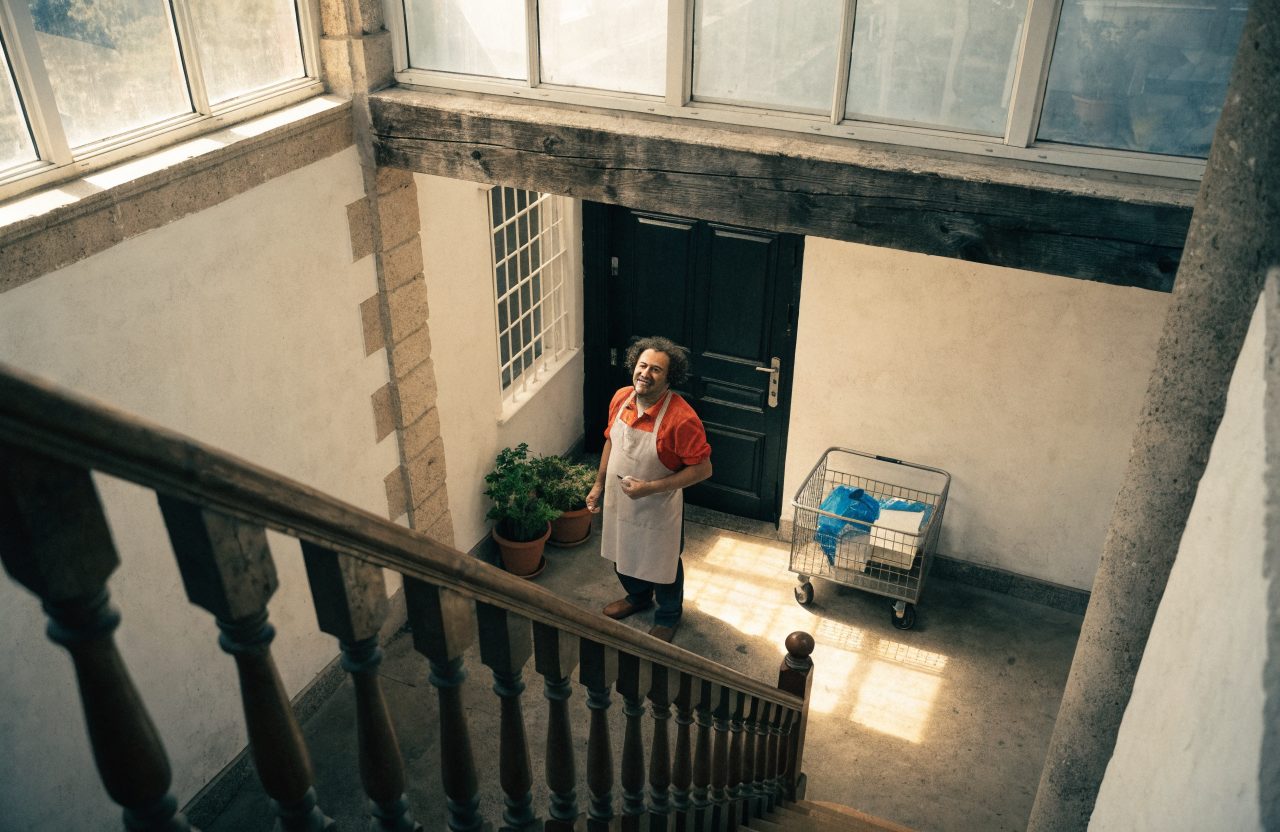
Look down towards the subject to reveal spatial exposure, reduce apparent stature or introduce a watching presence.
What it does
A high-angle shot looks down towards the subject from above their eyeline. It can diminish a person, but its meaning comes from context: the same angle may clarify geography, suggest surveillance or grant the viewer unsettling knowledge. In Psycho, John L. Russell’s elevated staircase framing transforms domestic space into a trap while controlling what the audience can identify. Robert Burks’s high views in North by Northwest expose people within enormous architectural and public spaces, making escape and anonymity unstable advantages. Keep camera height separate from tilt: a camera can be physically high without looking sharply down. Choose the angle according to what it reveals or withholds. Avoid the shorthand that every downward view equals weakness, and avoid it when the top of a head replaces the facial information the scene actually requires.
The prompt
Replace [Subject] with what you are shooting. Everything else is deliberate: the gear, stock and lighting are what push a generator towards this look.
Works well in
Midjourney, FLUX, Runway
Pairs with
The Prompt Atlas
Every prompt here is a starting point. The Prompt Atlas is the full system: hundreds of production-ready prompts organised by outcome, with the reasoning behind each one so you can adapt rather than copy.