
Wide Shot
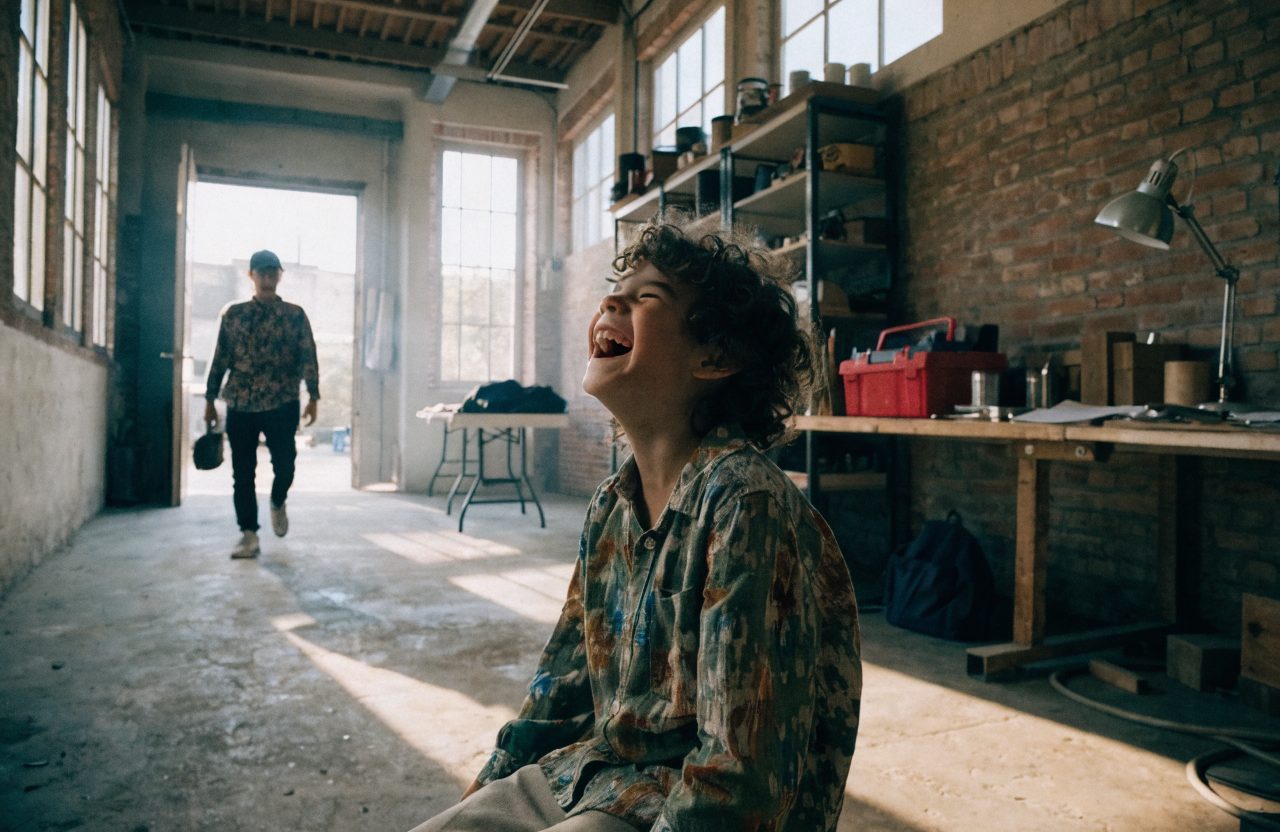
Show the subject within a readable location so geography, movement and relationships can carry the scene.
What it does
A wide shot gives the viewer enough space to understand where a subject stands, what surrounds them and which routes remain available. Unlike an extreme wide, it preserves useful body language while allowing architecture or landscape to influence the action. Roger Deakins’s photography in No Country for Old Men repeatedly makes spatial relationships a source of suspense: an empty stretch of ground can become a threat. Jacques Tati’s PlayTime, photographed by Jean Badal and Andréas Winding, uses wide compositions to let several small social performances coexist. The technique rewards blocking rather than merely displaying a location. Place entrances, obstacles and competing figures where the audience can discover them. Avoid it when background activity obscures the dramatic centre, or when an intimate exchange loses necessary facial detail without gaining anything from its surroundings.
The prompt
Replace [Subject] with what you are shooting. Everything else is deliberate: the gear, stock and lighting are what push a generator towards this look.
Works well in
Midjourney, FLUX, Runway
Pairs with
The Prompt Atlas
Every prompt here is a starting point. The Prompt Atlas is the full system: hundreds of production-ready prompts organised by outcome, with the reasoning behind each one so you can adapt rather than copy.