
Ground-Level Shot
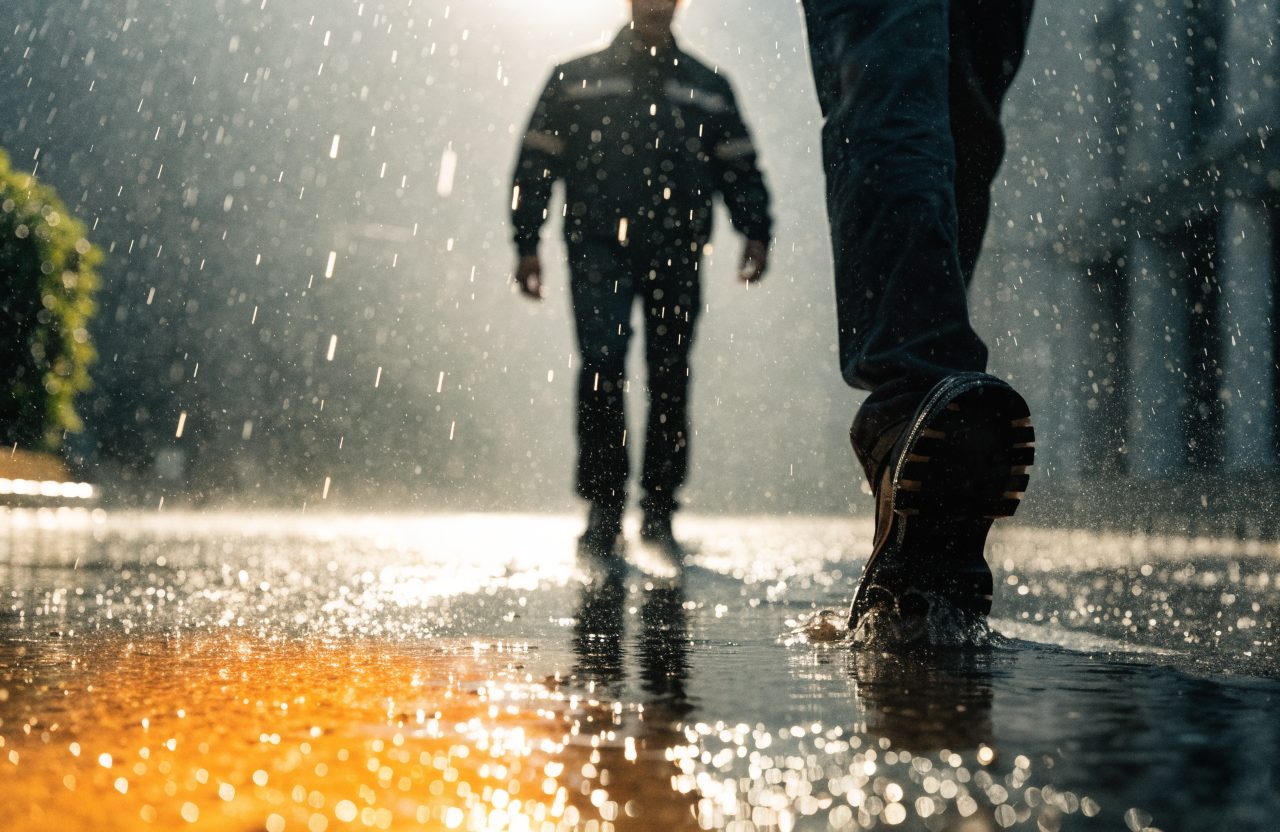
Place the lens close to the ground to make terrain, footsteps and low obstacles part of the audience’s physical experience.
What it does
A ground-level shot places the camera only a short distance above the surface, making grass, debris, water or footsteps dominate the immediate foreground. It is not necessarily a low-angle shot: the lens can remain level while the camera sits very low. Janusz Kamiński’s photography in Saving Private Ryan brings the viewer close to the exposed terrain of combat, where small changes in cover matter. John Toll’s work in The Thin Red Line repeatedly makes grass and the ground part of the soldiers’ sensory and emotional world. This height can create vulnerability, animal-like attention or an unusually tactile sense of passage. Give foreground material a meaningful relationship to the subject. Avoid it when accidental obstructions swallow the action, or when a low viewpoint suggests a concealed observer that the story does not intend.
The prompt
Replace [Subject] with what you are shooting. Everything else is deliberate: the gear, stock and lighting are what push a generator towards this look.
Works well in
Runway, Kling, Midjourney
Pairs with
The Prompt Atlas
Every prompt here is a starting point. The Prompt Atlas is the full system: hundreds of production-ready prompts organised by outcome, with the reasoning behind each one so you can adapt rather than copy.