
Extreme Wide Shot
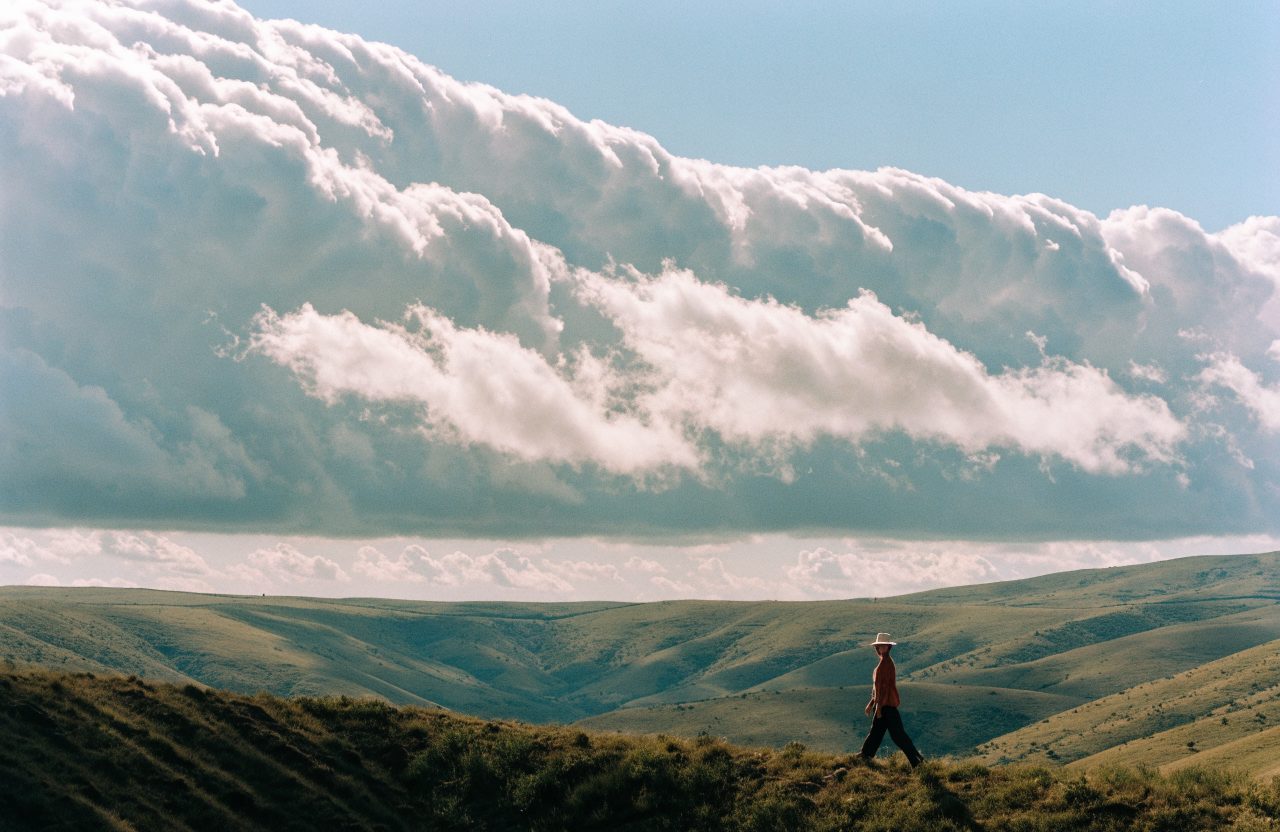
Make the environment dominant and the subject small to establish scale, isolation or the force of a journey.
What it does
An extreme wide shot makes the environment the principal visual fact, with the human figure reduced to a small but meaningful mark. Freddie Young’s desert photography in Lawrence of Arabia turns distance into an ordeal, making arrival and survival feel monumental. In The Searchers, Winton C. Hoch’s Monument Valley compositions place individual conflicts against a landscape that seems older and larger than any character. The emotional effect depends on proportion: the same tiny figure can suggest freedom, insignificance or exposure. Give the viewer a clear route through the frame using light, terrain or movement, otherwise scale becomes visual noise. Use it when geography changes the stakes or when a character’s relationship to a place matters. Avoid it when an essential reaction must be readable, or when an undifferentiated background makes the subject impossible to locate.
The prompt
Replace [Subject] with what you are shooting. Everything else is deliberate: the gear, stock and lighting are what push a generator towards this look.
Works well in
Midjourney, FLUX, Runway
Pairs with
The Prompt Atlas
Every prompt here is a starting point. The Prompt Atlas is the full system: hundreds of production-ready prompts organised by outcome, with the reasoning behind each one so you can adapt rather than copy.