
Cross-Key Lighting
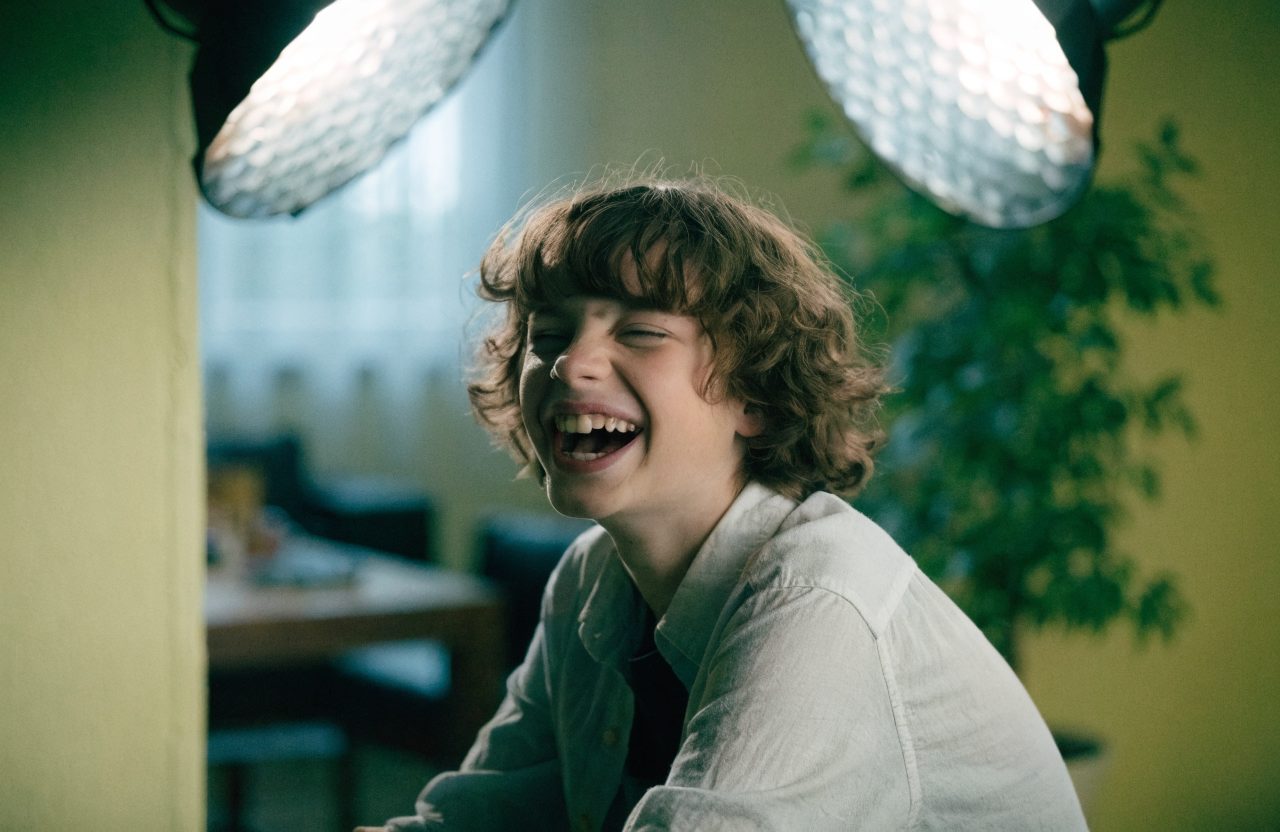
Two keys from opposite sides with little fill, so a face is caught between sources and the scene feels adversarial.
What it does
Cross-key lighting uses two keys from opposite sides and little or no fill, so both cheeks catch and a darker valley remains down the centre of the face. It is the lighting of rooms with windows or lamps on two walls, and of conversations that do not want a single heroic side. Emotionally it feels adversarial and alert: the person is caught between sources, with nowhere fully to hide. Jeff Cronenweth lit the deposition suites in The Social Network this way, the legal battle written as two competing windows. David Fincher and Cronenweth returned to dual sources throughout Gone Girl, so domestic space never quite became a nest. Use it for argument, interrogation and open-plan interiors that have honest architecture on two sides. Do not use it when you need a romantic key-and-fill courtship of the face, because the double catchlight and the central shadow will read as conflict even if the scene is tender.
The prompt
Replace [Subject] with what you are shooting. Everything else is deliberate: the gear, stock and lighting are what push a generator towards this look.
Works well in
Runway Gen-3, Flux, Sora
Pairs with
Mixed Colour TemperatureMotivated Lighting
The Prompt Atlas
Every prompt here is a starting point. The Prompt Atlas is the full system: hundreds of production-ready prompts organised by outcome, with the reasoning behind each one so you can adapt rather than copy.