
Chiaroscuro
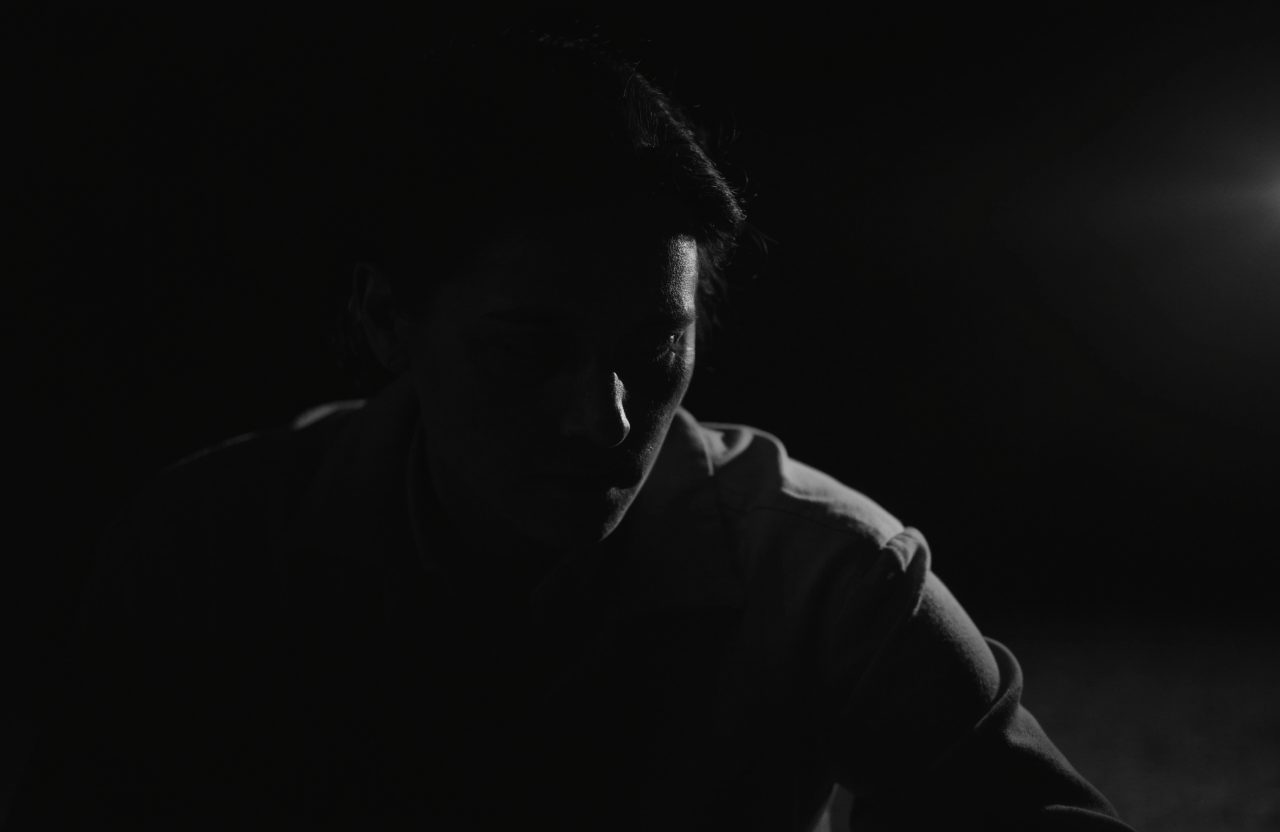
Violent difference between a small hard key and true black, so power, guilt and secrecy live in the unlit air.
What it does
Chiaroscuro is lighting by violent difference: a hard, often small key, and a willingness to let the rest of the frame fall toward black. The term is from painting, Caravaggio especially, and in cinema it is a moral tool more than a pretty contrast ratio. Emotionally it withholds. Power, guilt and secrecy live in the unlit air, and the audience leans in to complete the face. Gordon Willis earned the nickname the Prince of Darkness on The Godfather by letting eyes and rooms disappear. Roger Deakins carried a harder, dustier chiaroscuro into Prisoners and Sicario, so North American daylight itself felt accusatory once you stepped indoors. Vittorio Storaro's The Conformist uses shadow as political architecture. Use it for crime, tragedy, and any scene in which not seeing is the point. Do not use it on a story that needs spatial geography, on comedy, or on a streaming mix that will be watched on phones in sunlight, because the information in those blacks will vanish.
The prompt
Replace [Subject] with what you are shooting. Everything else is deliberate: the gear, stock and lighting are what push a generator towards this look.
Works well in
Midjourney, Stable Diffusion, Flux
Pairs with
The Prompt Atlas
Every prompt here is a starting point. The Prompt Atlas is the full system: hundreds of production-ready prompts organised by outcome, with the reasoning behind each one so you can adapt rather than copy.