
Architectural Symmetry
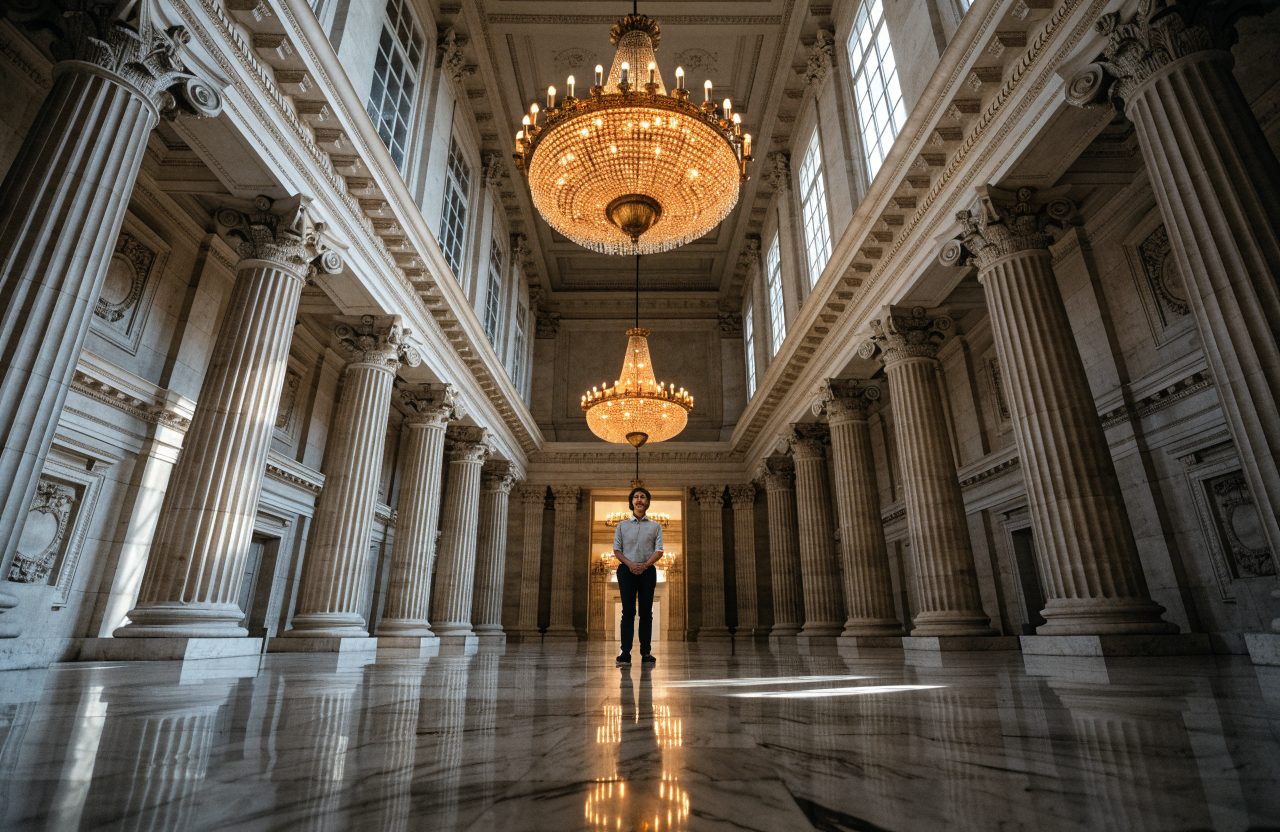
Mirroring architectural lines across a central dividing axis to impose artificial order, psychological control, or uncanny menace.
What it does
Architectural symmetry aligns the camera perspective directly with the central axis of an architectural space, producing a near-perfect bilateral mirror image between the left and right halves of the screen. This hyper-controlled visual structure evokes an uncanny sense of predestination, obsessive psychological control, divine order, or authoritarian surveillance. It makes the physical setting feel like an omnipresent character governing human behaviour. Stanley Kubrick utilised architectural one-point perspective and symmetry in The Shining, turning the Overlook Hotel's labyrinthine corridors into hypnotic traps of psychological madness. Roger Deakins deployed breathtaking architectural symmetry in Denis Villeneuve's Blade Runner 2049, framing Wallace's corporate sanctum with reflecting pools to communicate cold, godlike megalomania. When not to use it: Do not use architectural symmetry in chaotic guerrilla action scenes, gritty street realism, or spontaneous romantic interludes where immaculate geometric perfection destroys naturalistic authenticity.
The prompt
Replace [Subject] with what you are shooting. Everything else is deliberate: the gear, stock and lighting are what push a generator towards this look.
Works well in
Midjourney v6.1, Flux Schnell, Runway Gen-3
Pairs with
Deadpan Centre FramingDeep Focus Blocking
The Prompt Atlas
Every prompt here is a starting point. The Prompt Atlas is the full system: hundreds of production-ready prompts organised by outcome, with the reasoning behind each one so you can adapt rather than copy.