
Silhouette Lighting
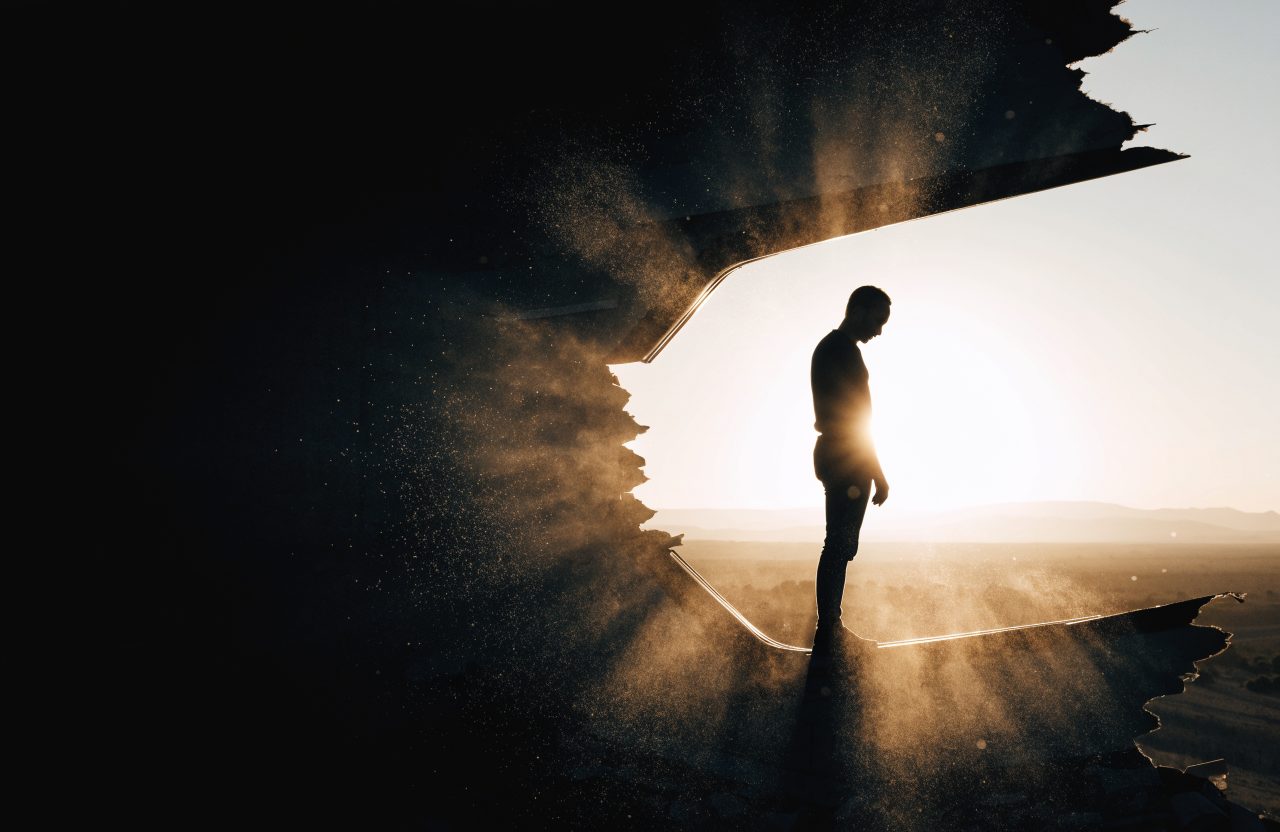
Expose for the background and let the figure fall to a cut-out, so posture becomes myth and the face is withheld.
What it does
Silhouette, or contre-jour, exposes for a bright background and lets the subject fall to a graphic cut-out, with little or no fill on the face. We read posture, hat, weapon and gait, not expression. Emotionally it mythologises. A person becomes an archetype, a rumour, or a fate already decided. Roger Deakins turned Bond into a calligraphy stroke against Shanghai glass in Skyfall, and again against fire in the chapel. Greig Fraser's dune figures in Dune are silhouettes before they are characters, which is the point of arriving on Arrakis. Vittorio Storaro's river and fire compositions in Apocalypse Now use the same refusal of facial information. Use it for arrivals, assassins, and any beat where mystery is more valuable than psychology. Do not use it through a long dialogue scene, because the audience cannot track the eyes and will detach.
The prompt
Replace [Subject] with what you are shooting. Everything else is deliberate: the gear, stock and lighting are what push a generator towards this look.
Works well in
Midjourney, Kling, Luma Ray
Pairs with
The Prompt Atlas
Every prompt here is a starting point. The Prompt Atlas is the full system: hundreds of production-ready prompts organised by outcome, with the reasoning behind each one so you can adapt rather than copy.